
Event Lighting
Event Lighting and Visual Effects Production
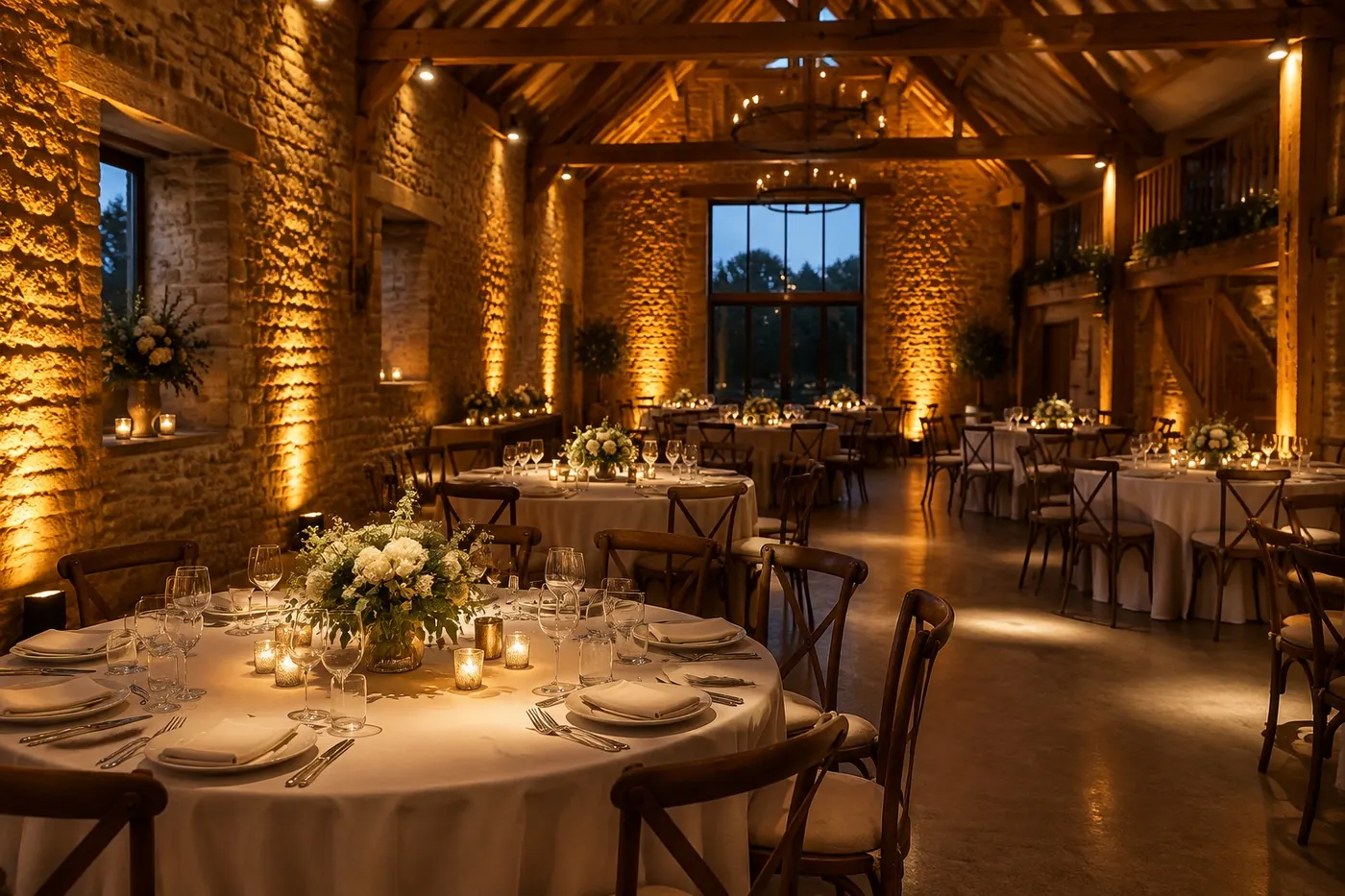
Good event lighting does two jobs: it makes the room look beautiful while guests eat and talk, then shifts into energetic dance floor effects later. Most venues are transformed with a dozen battery uplighters and a few pin-spots; moving heads and haze add the party atmosphere.
Last reviewed:
Ambient lighting: setting the room
Battery-powered wireless uplighters avoid trailing cables across historic floors and can be controlled together from one remote or DMX transmitter.
- Uplighting: fixtures on the floor washing walls, pillars or beams in a chosen colour.
- Pin-spots: narrow beams that pick out centrepieces, the cake or the top table.
- Festoon and fairy lights: soft decorative light, usually supplied by the venue or stylist.
Dance floor lighting
Once the formalities finish, moving heads, LED bars and effects lights create movement. Programming them to music or using a controller with sound-to-light keeps things lively without a dedicated operator.
DMX control basics
DMX512 is the standard protocol for controlling stage lighting. Each fixture is given a start address, and a controller sends values for colour, intensity, movement and effects. Wireless DMX is common for mobile setups because it removes control cables.
Safety and venue rules
- Check whether haze or smoke is allowed — many venues have smoke detectors that can trigger alarms.
- Use safety bonds on anything rigged overhead.
- Keep fixtures and cables away from fire exits.
- Avoid strobe effects or warn guests where photosensitive people may be present.
Lighting a barn, marquee or country house?
Wedding uplighting guide